

This post contains affiliate links. If you buy through them, we may earn a small commission at no extra cost to you — it keeps DecorHackss running. Thank you!
Rug Size Guide: The Short Answer
A rug that is too small is the single most common decorating mistake in living rooms — and it is also the easiest to fix, because rug size follows rules, not taste. If you remember only one rule from this rug size guide, make it this one: when in doubt, size up. A rug that is slightly too big grounds a room; a rug that is too small floats in the middle of it like a postage stamp.
Here is the short answer for the rooms people ask about most:
- Living room: 8×10 ft for most sofas, 9×12 ft for large or open-plan rooms
- Bedroom: a rug that extends 18–24 inches beyond the bed on each side
- Dining room: a rug that extends at least 24 inches beyond the table on every side, so chairs stay on it when pulled out
- Hallway / kitchen: a runner 2–3 ft wide, leaving a few inches of floor visible on each side
That is the whole cheat sheet. The rest of this guide explains the placement rules behind each number, gives you a room-by-room table, and covers the five mistakes that make even a beautiful rug look wrong. For another take on standard rug sizes, see The Spruce’s rug size guide.
Just like curtain height — covered in our How High Should You Hang Curtains? guide — rug size is one of those measurements that quietly decides whether a room looks finished or not. Get it right once, and everything else in the room suddenly looks more expensive.
The 3 Placement Rules That Decide Every Rug Size
Before the room-by-room numbers, learn the three rules. They explain every size in the table below, so you can size a rug for any odd-shaped room with confidence.
Rule 1: Front legs on, always
In a living room, the front legs of the sofa — and ideally the front legs of the chairs — should sit on the rug. This is what “anchors” the seating group. A rug that stops short of the sofa legs leaves the furniture floating, and the room never feels pulled together, no matter how pretty the rug is.
Rule 2: Leave a border of bare floor
A rug should not touch the walls. Leave 12–18 inches of bare floor between the rug edge and the wall in a living room (at least 6 inches in a small room). That border is what makes the rug look like a deliberate layer, not wall-to-wall carpet that ran out of material.
Rule 3: Chairs must stay on the rug when pulled out
This is the dining-room rule, and it is non-negotiable: pull a chair out as if you were sitting down, and all four legs should still be on the rug. If a chair leg catches the rug edge every time someone sits down, the rug is too small — and it will buckle, curl and annoy you daily.
Living Room Rug Sizes
The living room is where size mistakes hurt most, because the rug is the largest visual block in the room.
- Small living room / loveseat: 5×8 ft can work, but only if the front legs of the sofa and chairs all fit on it. If they do not, go up.
- Standard 3-seater sofa: 8×10 ft is the sweet spot for most living rooms. It fits the sofa, a coffee table and two chairs with front legs on.
- Large sofa, sectional or open-plan room: 9×12 ft. A sectional swallows a smaller rug whole — the rug should extend past the chaise end, not stop underneath it.
- Coffee table test: your coffee table should sit fully on the rug with room to spare on all sides. If the table legs hang off the edge, the rug is too small.
This is the same anchoring idea behind our Christmas living room decor ideas — the rug defines where the room’s conversation happens, and everything else arranges around it.
Bedroom Rug Sizes
In a bedroom, you do not need a rug under the whole bed — you need a rug where your feet land.
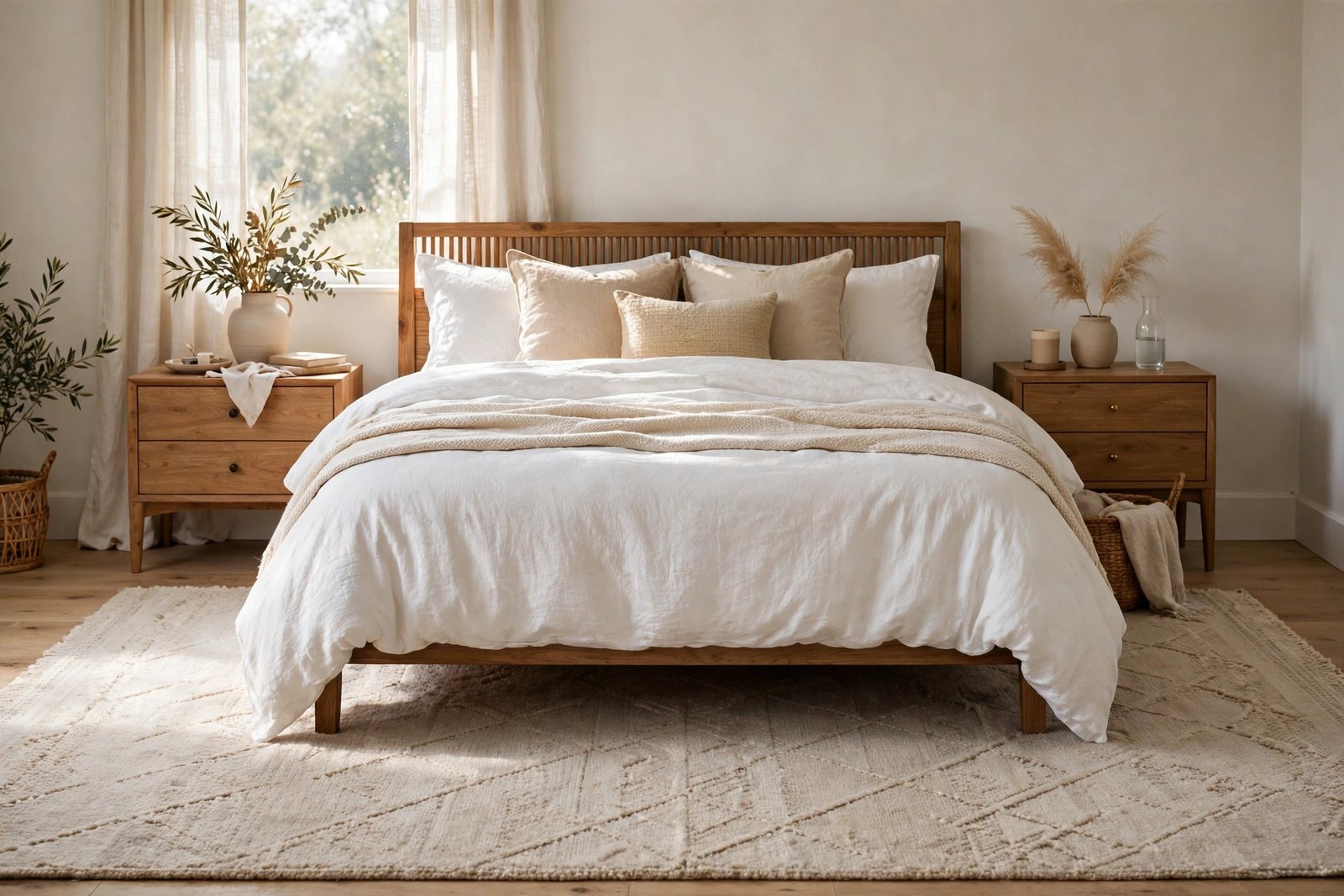
- Queen bed: an 8×10 ft rug placed under the lower two-thirds of the bed works beautifully, leaving 18–24 inches of rug visible on each side and at the foot.
- King bed: go 9×12 ft for the same effect, or use two runners (one on each side) if a full rug feels like too much.
- Small bedroom: a 5×8 ft rug across the foot of the bed, or runners on each side, beats a tiny rug that disappears under the bed entirely.
- The bare-feet test: step out of bed in the morning — both feet should land on rug, not cold floor. If they do not, the rug is in the wrong place or the wrong size.
For small rooms generally, the same “bigger feels bigger” logic applies — it is one of the foundations of our small apartment Christmas decor ideas.
Dining Room Rug Sizes
Dining rugs are sized by the table, not the room — and by the chairs when they are pulled out.
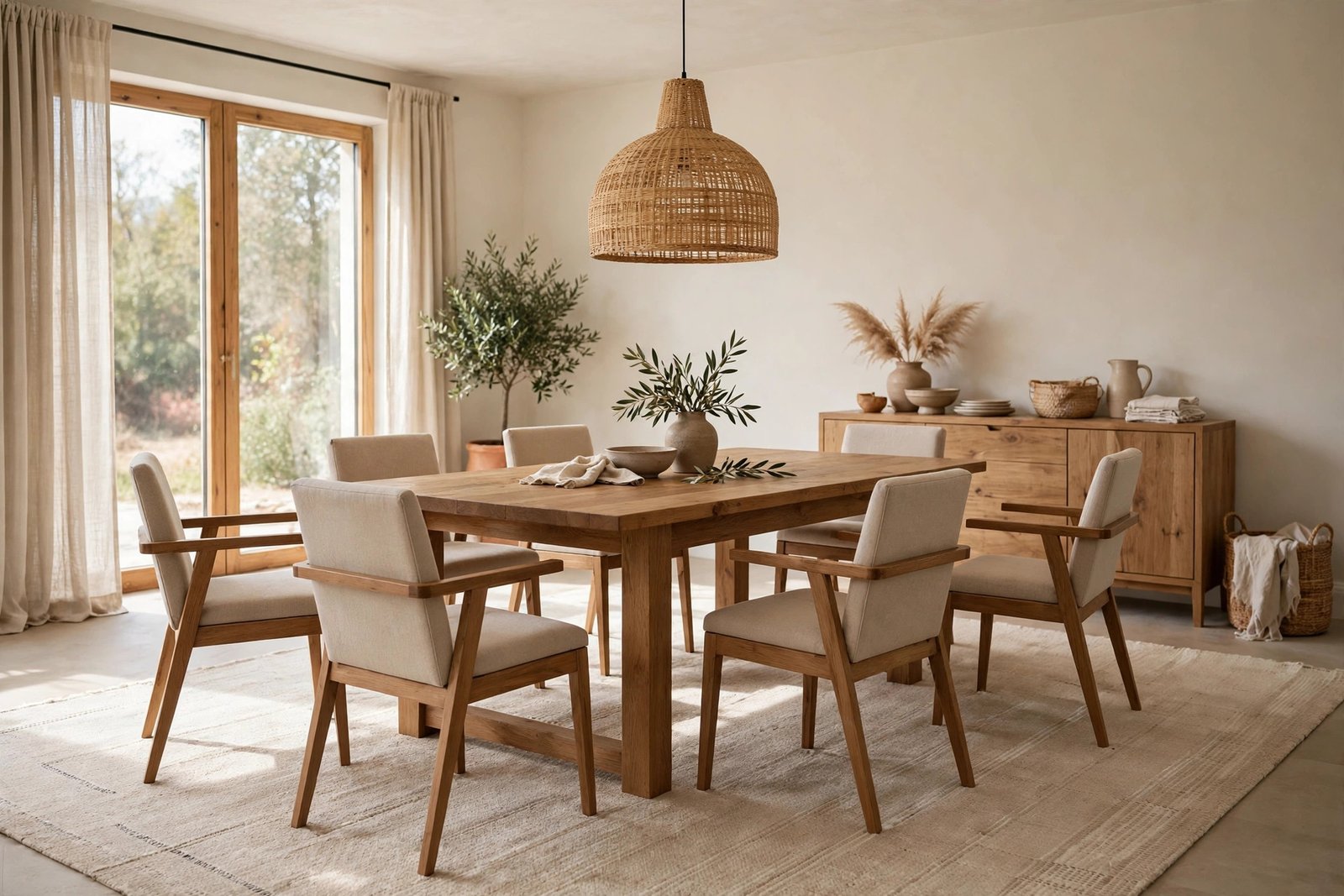
- Table for 4: 8×10 ft is usually enough, provided chairs stay on the rug when pulled out.
- Table for 6: 8×10 ft at minimum; 9×12 ft is safer for a long rectangular table.
- Table for 8+: 9×12 ft or larger, measured by the 24-inch rule below.
- The 24-inch rule: measure from the table edge outward — the rug must extend at least 24 inches beyond the table on every side. That is roughly the space a chair needs when someone pulls it out to sit down.
- Round tables: a round rug can work beautifully under a round table, but it must still clear the pulled-out chairs by the same 24 inches. A square rug under a round table is fine too, if the size is right.
One warning: a rug under a dining table will get crumbs, spills and chair scrapes. Choose a low-pile, easy-clean rug here — beauty matters less than washability in this room.
Hallways, Kitchens and Entryways
- Hallway runner: 2–3 ft wide, and long enough to cover most of the hallway while leaving a few inches of floor at each end. A runner that stops a foot short of a doorway looks unfinished.
- Kitchen runner: a runner in front of the sink or cooker, 2.5 ft wide is typical. It should lie flat — a thick pile runner in a kitchen is a trip hazard and a crumb trap.
- Entryway: a 3×5 ft or 4×6 ft rug that fits the door swing (the door must clear it) and gives guests a place to step onto, not past.
Quick-Reference Rug Size Table
| Room / Setup | Go-To Size | The Rule Behind It |
|---|---|---|
| Living room, 3-seater sofa | 8×10 ft | Front legs of sofa + chairs on the rug |
| Living room, sectional / open-plan | 9×12 ft | Rug extends past the chaise, not under it |
| Small living room / loveseat | 5×8 ft (minimum) | Only if all front legs fit on it |
| Queen bed | 8×10 ft | 18–24 in visible on each side + at the foot |
| King bed | 9×12 ft, or two runners | Both feet land on rug when you get up |
| Dining table for 4 | 8×10 ft | 24 in beyond the table on every side |
| Dining table for 6–8 | 9×12 ft | Chairs stay on the rug when pulled out |
| Hallway / kitchen | Runner, 2–3 ft wide | A few inches of floor visible on each side |
| Entryway | 3×5 ft or 4×6 ft | Door clears it; guests step onto it |
5 Rug Size Mistakes That Make a Room Look Wrong
Mistake 1: Buying the rug before measuring the furniture
People buy a rug they love, then discover it does not fit the sofa group. The fix: measure the seating group first — sofa width plus chairs — then buy the rug that covers it. The rug serves the furniture, not the other way round.
Mistake 2: Choosing a rug that only fits the coffee table
A rug sized for the coffee table alone leaves the sofa and chairs stranded off it. The fix: size for the whole seating group, using the front-legs-on rule, and let the coffee table sit in the middle of that larger rug.
Mistake 3: Forgetting the pulled-out dining chair
A dining rug that fits the table but not the chairs will buckle at the edges within a week. The fix: apply the 24-inch rule before buying — pull a chair out, measure, then add 24 inches on every side.
Mistake 4: Pushing the rug against the wall
Wall-to-wall rug placement erases the border that makes a rug look intentional. The fix: pull the rug out so 12–18 inches of floor shows around it (6 inches minimum in a small room).
Mistake 5: Layering two small rugs to fake one big one
Two small rugs side by side create a seam, a trip edge and a visual break right where the room should feel unified. The fix: one rug in the right size almost always looks better — and costs less than two pretty-but-wrong ones.
Frequently Asked Questions
Should a rug go under the entire sofa, or just the front legs?
Just the front legs is enough — and it is the designer standard. All four legs on the rug is fine for a large room with a 9×12 ft rug, but front-legs-on is the minimum that anchors the seating group. Anything less leaves the furniture floating.
What size rug do I need for a queen bed?
An 8×10 ft rug, placed under the lower two-thirds of the bed, is the standard answer. It leaves 18–24 inches of rug on each side and at the foot — exactly where your feet land in the morning.
Can a rug be too big?
Yes, but it is a much rarer mistake than too small. A rug becomes too big when it touches the walls on two or more sides, covers vents, or forces a door to drag across it. Keep that 12–18 inch border of bare floor and you will stay on the right side of the line.
Do I need a rug pad?
Yes, for almost every rug on a hard floor. A pad stops slipping, protects the floor, adds cushioning underfoot, and helps the rug lie flat instead of curling at the corners. It is the cheapest upgrade in this whole guide.
Rug Size Guide: The 10-Second Recap
Size up, not down. Front legs on in the living room, 18–24 inches beyond the bed in the bedroom, 24 inches beyond the table in the dining room, and a border of bare floor everywhere else. Measure the furniture first, buy the rug second — and if you are torn between two sizes, take the bigger one.
Once the rug is down, the rest of the room gets easier: the sofa group has its boundary, the coffee table has its place, and the room finally looks like it was decorated on purpose. If you want to see the same anchoring trick at work in a styled room, start with our living-room ideas — and when you are ready for the next measurement that changes a room, the curtain guide is waiting.
Happy decorating!